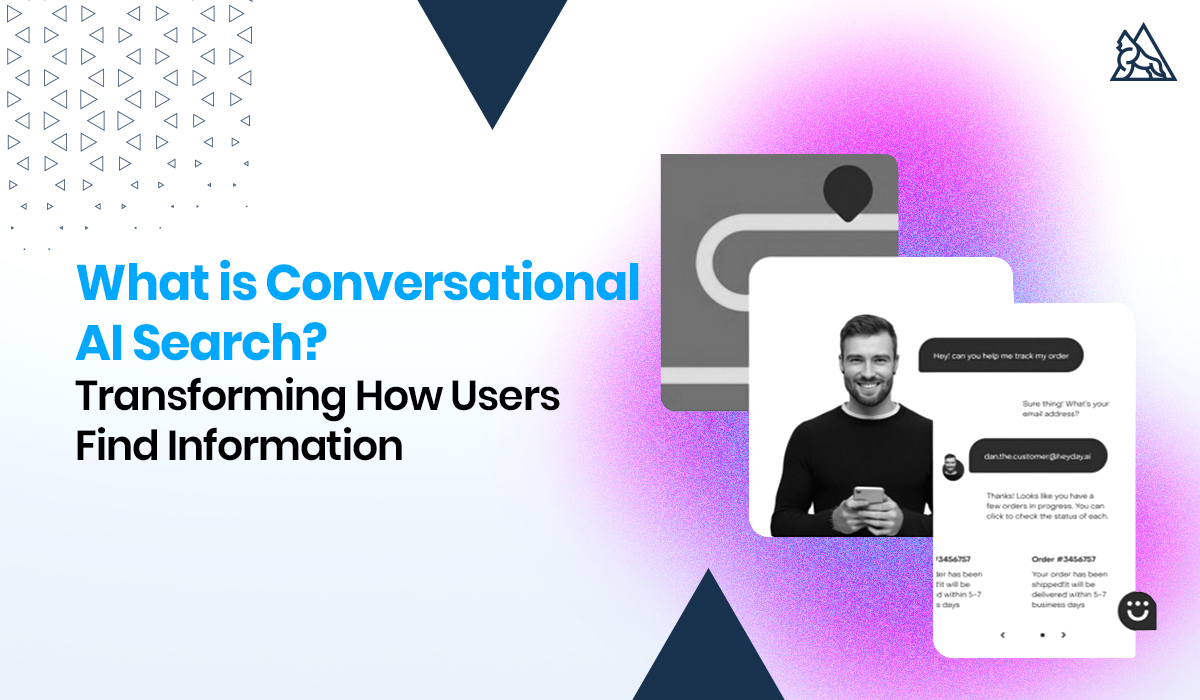


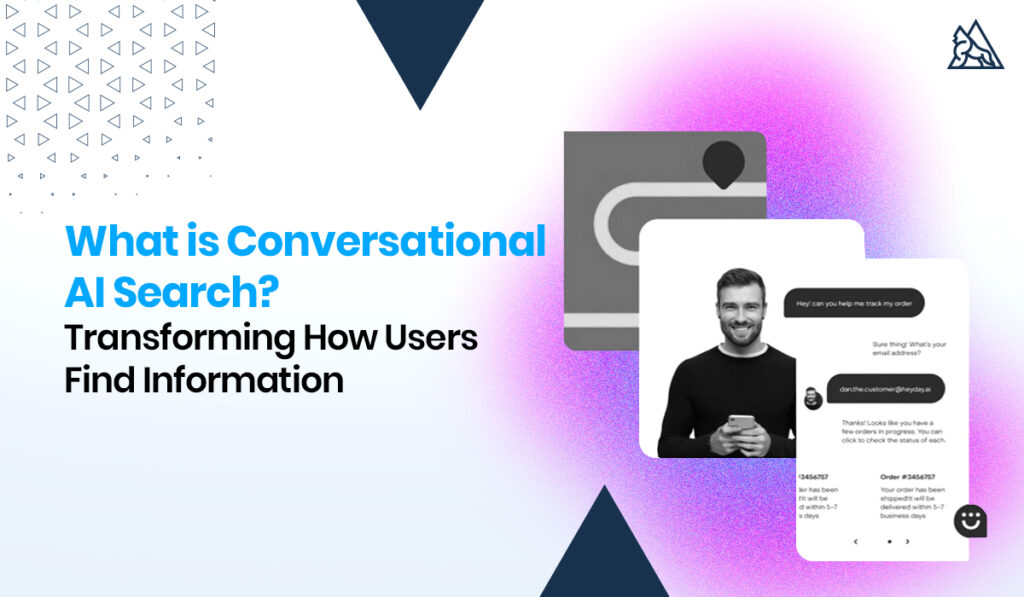


Conversational AI search is a search experience where users interact with AI systems through dialogue, and the AI generates answers directly instead of returning lists of links.
Tools like ChatGPT, Google Gemini, and Perplexity don’t retrieve results,they interpret intent, synthesize information, and deliver decisions.
This fundamentally changes how visibility works.
You no longer “rank” for a query.
You are either used by the AI to form the answer,or you’re invisible.
That’s why ChatGPT optimization services, Gemini AI optimization, Perplexity AI optimization services, and Answer Engine Optimization (AEO) now sit alongside,and often above,traditional SEO.
The Shift from Search Engines to Answer Engines
Traditional search engines acted as directories.
Conversational AI systems act as intermediaries.
Classic search behavior
- User types a query
- Search engine returns links
- User evaluates sources
Conversational AI behavior
- User asks a question
- AI interprets intent
- AI generates a response
- User accepts or refines
The evaluation step disappears.
That single change reshapes how authority, trust, and discovery work online.
What Makes Conversational AI Search Different
Conversational AI search differs from classic search in four structural ways:
1. Queries Are Sequential, Not Isolated
Users don’t ask one question,they have a conversation.
Each prompt:
- Builds on previous context
- Narrows uncertainty
- Refines intent
AI systems prioritize sources that can support multi-step reasoning, not just one-off answers.
2. Answers Are Generated, Not Retrieved
Conversational AI doesn’t surface your page.
It uses your ideas.
This means:
- Your wording may be paraphrased
- Your frameworks may be reused
- Your brand may be mentioned,or omitted
Visibility becomes conceptual, not navigational.
3. Trust Is Pre-Evaluated
The AI decides which sources are:
- Credible
- Low-risk
- Appropriate for the user’s context
By the time an answer is generated, the “ranking” decision is already over.
4. Follow-Up Questions Are Expected
Conversational AI anticipates:
- Objections
- Clarifications
- Edge cases
Content that lacks boundaries or judgment performs poorly because it cannot support follow-up reasoning.
Why Conversational AI Search Changes Optimization Entirely
SEO optimizes for selection by humans.
Conversational AI optimization focuses on selection by machines.
That difference introduces new constraints:
- Machines prefer clarity over creativity
- Machines prefer judgment over neutrality
- Machines prefer consistency over novelty
This is why optimizing for conversational AI is not a content formatting exercise,it’s a knowledge design problem.
How ChatGPT, Gemini, and Perplexity Actually Choose Sources
While interfaces differ, their internal logic converges.
They favor content that demonstrates:
- Entity clarity
- Clear specialization
- Stable topical boundaries
- Answer extractability
- Direct answers
- Logical structure
- Confidence signals
- Clear positions
- Explained trade-offs
- Consistency over time
- Repeated framing
- Named concepts or systems
This is why optimize for ChatGPT answers does not mean prompt hacking,it means being a reliable reference.
ChatGPT Optimization: What It Actually Involves
ChatGPT optimization services focus on increasing the likelihood that:
- Your brand is recalled
- Your explanations are reused
- Your perspective shapes answers
This is achieved by:
- Answer-first content design
- Repeated association with specific problems
- Clear, opinionated explanations
- Stable terminology across content
ChatGPT doesn’t reward clever copy.
It rewards predictable clarity.
Gemini AI Optimization: A Search-Native AI Layer
Google Gemini integrates deeply with:
- Search results
- Knowledge graphs
- Entity trust signals
This makes Gemini AI optimization highly sensitive to:
- Brand consistency
- Entity definitions
- Topical authority boundaries
Gemini favors content that:
- Resolves uncertainty quickly
- Matches the expected answer depth
- Aligns with established entity understanding
SEO still matters here,but only as a foundation.
AEO determines whether Gemini uses your content at all.
Perplexity AI Optimization: The Research Engine Model
Perplexity behaves more like an AI research assistant.
It:
- Compares sources
- Highlights citations
- Evaluates contradictions
This makes Perplexity AI optimization services especially dependent on:
- Clear claims
- Evidence-backed reasoning
- Differentiated viewpoints
Generic explanations are easy to replace.
Distinct reasoning is not.
How Conversational AI Interprets User Intent
Intent in conversational AI is dynamic, not fixed.
Instead of asking:
“What type of query is this?”
AI asks:
“What decision is the user trying to make right now?”
That decision evolves with every turn in the conversation.
This is why conversational AI prefers content that:
- Explains why, not just what
- Addresses risks
- Identifies when advice does not apply
Intent resolution matters more than intent matching.
How Does Answer Engine Optimization Work?
Answer Engine Optimization (AEO) is the discipline of making your expertise usable by conversational AI systems.
At a practical level, AEO works by:
- Designing answers, not articles
- Clear conclusions first
- No narrative delays
- Reducing ambiguity
- Explicit assumptions
- Defined scope
- Embedding judgment
- When it works
- When it doesn’t
- Who should not follow it
- Reinforcing entity authority
- Repeated topical focus
- Consistent language
AEO is not about traffic.
It’s about answer inclusion.
Conversational AI and the End of the Funnel Illusion
In classic SEO, the funnel looked like:
- Discover → Click → Convert
Conversational AI collapses this.
Users now:
- Discover
- Evaluate
- Decide
All inside the AI interface.
This means:
- Influence happens without visits
- Brand perception forms pre-click
- Exclusion means invisibility
This is why conversational AI search disproportionately impacts:
- B2B
- SaaS
- Professional services
- High-consideration purchases
Why Neutral Content Fails in Conversational AI
Neutral content avoids risk,but AI systems are designed to reduce risk.
They prefer sources that:
- Have already made decisions
- Can explain trade-offs
- Signal experience
Neutral explanations:
- Blend together
- Increase uncertainty
- Require follow-up
Conversational AI optimizes for finality, not balance.
Common Mistakes Brands Make with Conversational AI Search
Mistake 1: Treating AI like another traffic channel
AI is a decision layer, not a referrer.
Mistake 2: Writing long-form content without conclusions
If the answer isn’t clear, it won’t be used.
Mistake 3: Optimizing for prompts instead of memory
AI systems recall patterns, not tricks.
Mistake 4: Inconsistent positioning
Contradictions destroy trust signals.
What Winning Brands Do Differently
Brands that perform well in conversational AI search:
- Define what they are experts in,and what they’re not
- Repeat the same frameworks across content
- Use declarative, confident language
- Design content for reuse, not reading
They don’t chase visibility.
They engineer trust.
When Conversational AI Optimization Matters Most
This approach is critical when:
- Users research before buying
- Trust influences outcomes
- Categories are complex or noisy
- AI is used for vendor comparison
If your buyers ask:
“Who should I listen to?”
Conversational AI decides before you ever get a chance to speak.
The Long-Term Impact of Conversational AI Search
Over time, conversational AI will:
- Reduce visible choices
- Concentrate authority
- Reward consistent thinkers
The web becomes less about:
- Who publishes the most
And more about:
- Who explains things best
That shift is irreversible.
Final Takeaway
Conversational AI search changes the rules of visibility.
- You don’t rank,you’re referenced
- You don’t attract clicks,you shape answers
- You don’t optimize pages,you design knowledge
To compete, brands must invest in:
- ChatGPT optimization
- Gemini AI optimization
- Perplexity AI optimization
- Answer Engine Optimization that prioritizes clarity and judgment
In the age of conversational AI, success doesn’t come from being found.
It comes from being trusted enough to speak.