
Let’s not hide it: people are searching for things in a completely different way. Just a few years ago “searching” was as simple as typing in a phrase and clicking through 10 blue links. Now? ChatGPT is used to help people decide what laptop they should buy. Perplexity summarises the best CRM software. Google’s AI overviews gives them an answer without even having to click a website.
Even if your brand doesn’t appear in these AI-generated results, you will become invisible. This is true even if your site still ranks on the first page of a traditional search. This is why generative engines optimization services are no longer a “nice to have”, but an absolute necessity by 2026.
What is Generative Engine Optimization?
Generative Engine Optimization (GEO), is a practice that involves structuring and positioning content for your brand so that AI systems such as ChatGPT and Google’s AI overviews, Perplexity and Claude can actually use it in their generated answers. GEO is not just about ranking on the search results page. It’s also about becoming a source that AI systems will trust enough to summarize, recommend, and cite.
Consider this: Traditional SEO in front of a human scrolling. GEO puts you in front an AI answering your questions on your behalf. This answer could be the first time a customer has ever interacted with your brand.
Why this Shift is Important
The search behavior data from 2025 to 2026 shows a consistent, undeniable pattern: More queries are resolved within AI interfaces with no clicks at all. This is not a small shift, it’s a major change in the discovery funnel. Brands who ignore it miss out on an opportunity, and they slowly disappear from the conversation.
Why do brands need GEO by 2026?
Let’s face it: If a customer asks a virtual assistant, “What’s best for project management?” and you are not mentioned while your competitor is, you have lost the customer even before they visit your website. In that moment, there’s no chance to make it right.
In 2026, investing in generative engines optimization services is not about following a trend. It’s about protecting the basic discoverability of your brand. This is urgent for a few reasons:
- AI search market shares are growing rapidly. AI-based tools are more popular than traditional search engines as the first place consumers begin their research.
- The new norm is to get answers in one click. Many users can get all the information they need by visiting just one website.
- The trust signals are changing. AI models are more likely to cite authoritative sources that they consider structured and accurate. This means your brand’s visibility in AI searches is now dependent on how “citeable” you content actually is.
- Early movers are rewarded disproportionately. Brands that invest in AI-ready strategy for content are setting themselves up for being the default answer to their category, just as early SEO adopters have dominated search results over years.
Costs of doing nothing
You’re not neutral if you ignore GEO. You’re losing ground. ChatGPT, Perplexity and their competitors will recommend brands whose competitors invest in AI search engine optimization today. Once an AI model “learns”, a brand is associated with the most trusted answer for a particular niche. It’s difficult to change that association.
What is the difference between GEO and SEO?
Let’s compare GEO, SEO and AEO.
Search Engine Optimization (SEO)
The traditional SEO is ranking pages in search engines such as Google by using keywords, backlinks and technical site health. The goal is to get clicked.
AEO (Answer Engine Optimization)
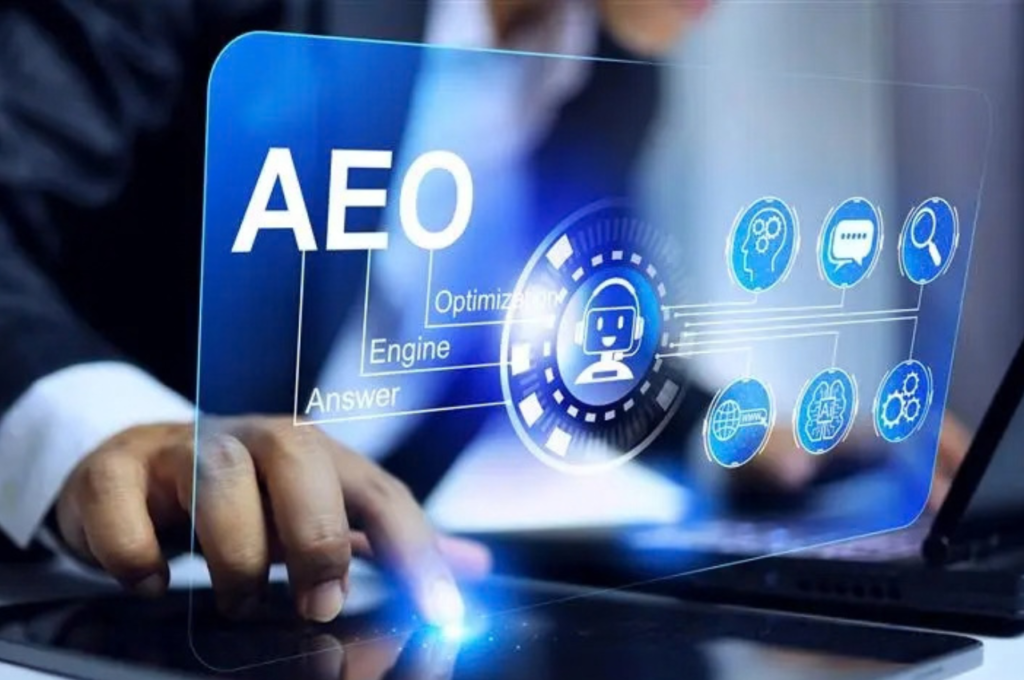
AEO focuses on gaining a position in the featured snippets and voice search results, as well as “People Also Ask” (or “People Also Ask”) boxes. It’s the bridge between traditional SEO and full GEO.
GEO (Generative Engine Optimization)
GEO takes it a step farther. This is not about ranking or answering one query, but about becoming the source that large language engines reference when creating a new answer. Information from different sources can be combined into a single response. It requires factual content that is well-structured, a strong authority on the topic, and a consistent web presence (reviews and mentions, structured information, and credible references).
What is the need for a generative engine optimization service?
Answer: If your customers research products before purchasing using Google, ChatGPT or other AI assistants, then yes.
Working with a company that specializes in generative engine optimization can be beneficial if you:
- You’re not mentioned when AI answers are generated.
- You’ve noticed that organic traffic has dropped despite your rankings remaining the same (a classic indication of AI zero-click answers stealing visibility).
- You haven’t organized your content for AI extraction (no headers, direct answers, or schema markup).
- It is better to plan ahead than to scramble later to catch up.
Quick Self-Check
Do you think your brand would appear if someone entered your industry and “best” in ChatGPT? You should be able to tell if you are not sure, or if you know that the answer is “no”.
How do you get cited by ChatGPT or AI search engines?
It’s not magic to get cited, but you have to work at it.
- Answer questions clearly and directly. AI models prefer content that provides a direct answer first, and then elaborates.
- Create topical authority. Cover the topic comprehensively in multiple pieces of content and not just one post.
- Structured data and clean formatting are important. Use headers, lists and schema markup to help AI models extract and parse your content accurately.
- Earn mentions on the internet. AI models consider brand consistency, so reviews, citations and mentions in reputable websites all help.
- Content should be accurate and up-to-date. Information that is outdated or contradictory reduces your chances of being cited by a credible source.
It’s the type of content-driven, ongoing work that an experienced GEO team does every day. And it’s the kind AI search visibility service brands will prioritize in their marketing budgets for 2026.
What are the GEO Services?
The pricing of generative engine optimization services varies greatly depending on the scope. However, most fall into one or two general models.
- Monthly retainers to continue content optimization, AI citation tracker, and technical adjustments
- Project-based audits for assessing current AI visibility and building a roadmap
- Brands that want a unified search presence on all channels can benefit from full-service packages including SEO, AEO and GEO.
Instead of focusing on cost alone, you should consider the possibility that your brand will lose visibility as AI-driven searches continue to grow.
Want to be found where your customers are actually searching?
It’s not coming, it’s here. AI search is changing the way customers discover brands. This shift is what Gorilla360 helps brands prepare for. We help them get structured, cited and recommended by AI tools that your customers trust.
Let’s discuss a GEO-based strategy that is built around your brand, your industry and AI generated answers.
Frequently Asked Questions
What does generative engine optimization mean?
It is the process of optimizing brand and content so AI systems such as ChatGPT, Perplexity and Google AI Overviews can cite your brand or mention it when they generate answers to queries from users.
Why does GEO matter to brands in 2026?
A growing number of searches don’t result in a click on a website, so they are resolved completely within AI tools. Brands risk being invisible in AI-generated results without GEO.
What is the difference between GEO and SEO?
SEO aims to rank links on traditional search engines to drive clicks, while GEO focuses on getting your content synthesized and cited directly inside AI-generated answers.
Does my brand require generative engine optimization?
GEO is a good option if your customers use AI to research before purchasing, which they do more and more these days.
How much do GEO services cost?
The cost of SEO, AEO and GEO packages can vary depending on the scope. They range from monthly retainers, to audits, to full-service packages that combine SEO, AEO and GEO.
What is the best way to get your site cited in ChatGPT or AI search engines?
You can build brand awareness online by publishing well-structured content, utilizing schema markup and ensuring that your brand is consistently mentioned across credible sources.