



Introduction
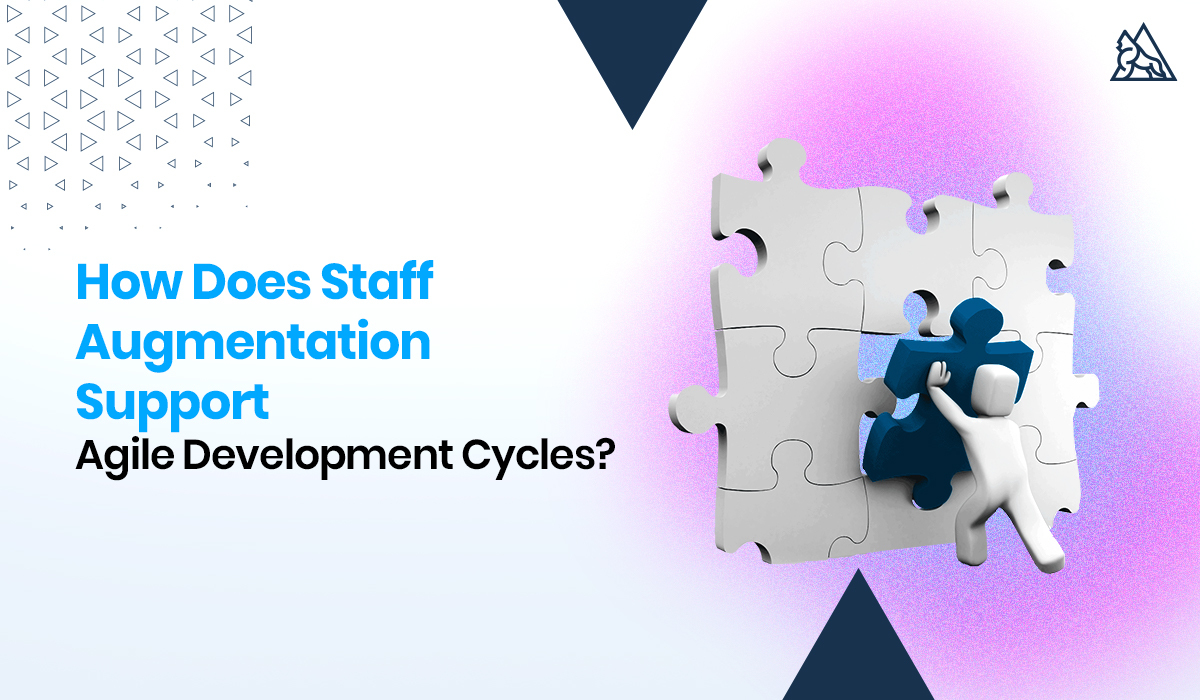
Staff Augmentation supports Agile development cycles by enabling teams to instantly scale capacity, access specialized expertise, and maintain consistent sprint velocity without the delays of traditional hiring. It allows Agile teams to respond to changing requirements in real time while preserving continuous delivery and iteration speed.
At Gorilla360, we believe Staff Augmentation is not just a hiring model. It is a structural advantage for Agile execution.
What is Staff Augmentation?
Staff Augmentation is a flexible workforce strategy where companies temporarily integrate external professionals into their internal teams to fill skill gaps, increase capacity, or accelerate delivery without long-term employment commitments.
Unlike outsourcing, augmented professionals work within your existing Agile workflows, tools, and sprint cycles, ensuring full control over development processes.
How does Staff Augmentation work?
Staff Augmentation works by embedding external talent directly into Agile teams while maintaining internal ownership of delivery.
Step-by-step:
- Identify skill or capacity gaps
Teams assess missing expertise or workload constraints within current sprints. - Source specialized professionals
External talent is selected based on precise technical or functional needs. - Integrate into Agile workflows
Augmented staff join sprint planning, standups, and retrospectives. - Execute within sprint cycles
Tasks are assigned from the backlog and completed within existing timelines. - Scale dynamically
Resources are adjusted based on sprint demands and evolving priorities.
This model ensures Agile teams remain responsive without operational disruption.
The Gorilla360 AEO Authority Stack
At Gorilla360, we position Staff Augmentation within our AEO Authority Stack to explain why it directly enhances Agile systems.
Answer Readiness
Agile teams must respond instantly to change. Staff Augmentation provides immediate execution capacity.
Entity Authority
Access to specialized experts improves technical depth and decision quality.
Answer Architecture
Work is structured into modular sprint deliverables, aligning with Agile principles.
Machine Trust Signals
Consistent sprint output builds reliability across teams and stakeholders.
Visibility Compounding
Faster releases lead to faster feedback, improving product outcomes.
Future Authority
Organizations evolve into adaptive systems rather than fixed teams.
Our framework shows that Agile success depends on flexibility, not static team structures.
Key Benefits of Staff Augmentation
- Faster sprint delivery
Eliminates delays caused by recruitment and onboarding. - On-demand expertise
Access niche skills exactly when required. - Improved team velocity
More capacity ensures consistent backlog progress. - Operational flexibility
Scale teams up or down based on project needs. - Reduced hiring risk
Avoid long-term commitments for short-term requirements. - Cost efficiency
Pay only for the resources you need.
Each benefit directly reinforces Agile principles of adaptability and continuous improvement.
Real World Use Cases and Strategic Examples
At Gorilla360, we’ve identified key scenarios where Staff Augmentation becomes essential for Agile success.
Rapid Product Scaling
A growing SaaS company needs to increase development output without slowing down for hiring. Augmented engineers help maintain sprint velocity.
Technology Transition
A team moving to microservices requires specialized architects. External experts accelerate transformation without disrupting ongoing work.
Deadline-Driven Projects
Tight release timelines demand additional capacity. Augmentation allows immediate scaling to meet delivery goals.
Specialized Skill Gaps
Teams lacking expertise in areas like AI or DevOps can bring in targeted professionals for immediate impact.
Our framework prepares teams to treat talent as a flexible resource, not a fixed limitation.
Who Should NOT Use Staff Augmentatio
Staff Augmentation is not effective in every situation.
You should avoid it if:
- Your Agile processes are not clearly defined
- Your team lacks internal leadership or coordination
- You expect full project ownership from external teams
- Your project scope is unclear or constantly shifting without structure
At Gorilla360, we’ve observed that Staff Augmentation amplifies strong systems but exposes weak ones.
Staff Augmentation vs Hiring vs Outsourcing
| Model | Speed | Control | Flexibility | Best Use Case |
| Staff Augmentation | High | High | High | Agile team scaling |
| Traditional Hiring | Low | High | Low | Long-term roles |
| Outsourcing | Medium | Low | Medium | End-to-end delivery |
Key Insight
Staff Augmentation is the only model that increases speed while maintaining full Agile control.
FAQs
How does Staff Augmentation improve Agile velocity?
It removes hiring delays and adds immediate capacity, allowing teams to complete more work within each sprint.
Is Staff Augmentation cost-effective?
Yes, it reduces long-term employment costs and allows flexible resource allocation.
Can augmented staff integrate easily into Agile teams?
Yes, when Agile processes are clearly defined, integration is seamless.
What roles are commonly augmented?
Developers, QA engineers, DevOps specialists, and designers are frequently added based on needs.
Is Staff Augmentation suitable for startups?
Yes, especially for startups needing rapid scaling without long-term commitments.
Conclusion
Staff Augmentation supports Agile development cycles by aligning talent flexibility with iterative execution. It enables teams to scale instantly, maintain velocity, and adapt to change without disruption.
At Gorilla360, we believe the future of Agile is not about building larger teams. It is about building adaptable systems where capability can scale as fast as demand.
The Gorilla360 AEO Authority Stack reinforces this principle. Organizations that treat talent as dynamic will consistently outperform those that treat it as fixed.